
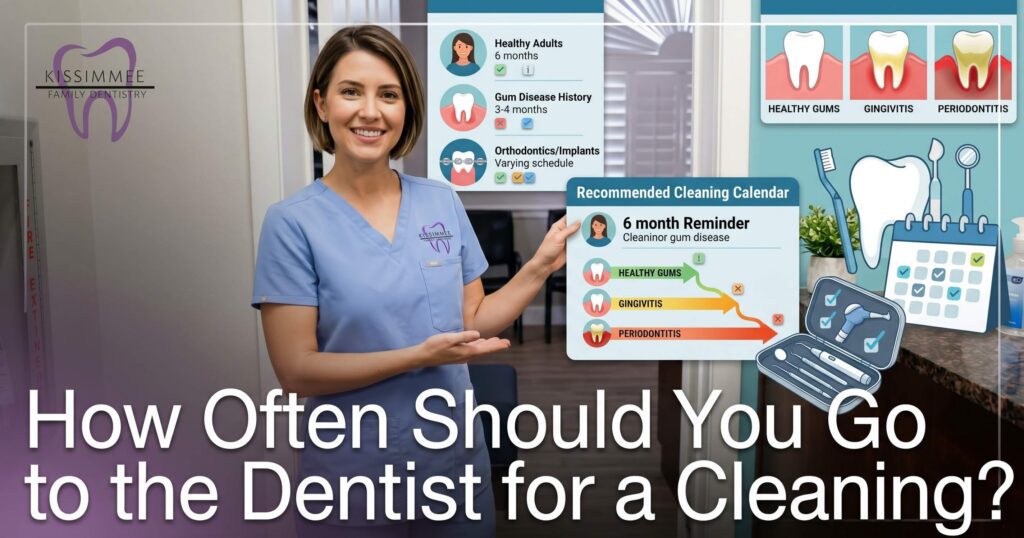
If you have ever wondered how often should you go to the dentist for a cleaning, the short answer is this: most people do well with a visit every six months. But that is not a law of nature, and it is not the right schedule for everyone.
Some patients can comfortably stay on a six months routine and maintain healthy teeth and gums with good brushing and flossing at home. Others need more frequent cleanings because plaque buildup, tartar buildup, gum disease, dry mouth, tobacco products, medical conditions, or a family history of dental issues can raise their risk. A cleaning schedule should fit the person, not the other way around.
At Kissimmee Family Dentistry, that kind of individualized care matters. Patients are not rushed through a one-size-fits-all system. Instead, the goal is to look at your oral health, your habits, your risk factors, and the condition of your teeth and gums, then recommend a plan that actually makes sense for your life.
Why regular dental cleanings matter more than people think
A professional teeth cleaning does more than make your mouth feel fresh. It helps remove plaque, clear away tartar that brushing cannot reach, and catch small dental problems before they become expensive, painful ones. Think of it like changing the oil in a car. Skip it long enough and the damage builds quietly.
Regular dental cleanings also support overall oral health in ways people do not always see in the mirror. During dental visits, your dentist and dental hygienist are checking for cavities, inflamed gums, gum problems, bad breath linked to bacterial buildup, and signs of oral cancer. In some cases, that early detection matters just as much as the cleaning itself.
When plaque and tartar sit along the gumline, they can irritate the gums and create the conditions for gum disease. Left alone, that can lead to bleeding, recession, bone loss, and eventually tooth loss. Regular cleanings are one of the simplest forms of preventive care because they interrupt that process before it gains momentum.
Is every six months the standard?
Yes, six months is the most common recommendation, and many dentists recommend it because it works well for most people. The American Dental Association notes that dental visits should be tailored to individual needs rather than locked into a universal calendar, which is why some patients need regular dental visits more often than others.
For a person with low risk, healthy gums, no recent cavities, and strong oral hygiene habits, six months may be enough to keep plaque buildup under control. A routine cleaning twice a year often gives the dentist a reliable window to monitor changes, provide treatment early if needed, and help keep healthy teeth stable over time.
But “every six months” should not be treated like a magic number. It is more like a baseline. If your mouth tends to collect tartar quickly, if your gums are prone to inflammation, or if you have ongoing dental health concerns, waiting half a year may be too long.
Signs you may need more frequent cleanings
Some mouths are simply higher maintenance. That is not a character flaw. It is biology, habits, medication, age, and sometimes plain bad luck. More frequent cleanings may be recommended if you develop tartar quickly, get cavities often, or have a history of gum disease.
You may need frequent cleanings if you notice bleeding when brushing, persistent bad breath, tender or inflamed gums, or a fuzzy feeling on your teeth soon after a previous cleaning. These are clues that plaque buildup is returning fast and that home care may not be enough by itself.
Other risk factors include diabetes, pregnancy-related gum changes, weakened immune systems, dry mouth caused by medications, orthodontic appliances, and tobacco products. Patients with these concerns often benefit from professional cleaning at shorter intervals because the risk of oral health problems rises when the mouth is under extra stress.
A family history of gum problems can also matter. If close relatives have dealt with advanced gum disease or early tooth loss, your dentist may watch your gums more closely and suggest more frequent cleanings to help prevent gum disease before it starts.
What happens during a professional teeth cleaning
A professional teeth cleaning is more thorough than what you can do at home, even with excellent brushing and flossing. The hygienist uses special tools to remove plaque and tartar from around the teeth and just below the gumline. These areas are where food particles, bacteria, and tartar buildup like to hide.
After that, the teeth are polished to smooth the surfaces and help eliminate surface stains. This step can remove plaque residue and lift some surface stains from coffee, tea, or daily wear. It is not the same as whitening treatment, but it can make professional teeth look brighter and cleaner.
Your appointment may also include flossing, a fluoride treatment, and an exam by the dentist. Fluoride treatment can help strengthen tooth enamel and lower the risk of tooth decay, especially for patients who are cavity-prone or have sensitive teeth. The exam is where your dentist looks for dental issues that are easier to treat early than late.
If you are due for a dental cleaning, this kind of preventive visit is one of the most practical ways to protect both your smile and your budget.
Routine cleaning vs deep cleaning
Not every cleaning is the same. A routine cleaning is meant for patients whose gums are generally healthy and whose plaque and tartar buildup is limited to the visible tooth surfaces and shallow gumline areas.
A deep cleaning, on the other hand, is a treatment used when gum disease is present. If the gums have begun to pull away from the teeth and deeper pockets have formed, bacteria can settle below the surface where a standard cleaning will not reach. In that case, a deep cleaning may be needed to clean under the gums and reduce infection.
People often use “teeth cleaning” as a catch-all phrase, but the difference matters. A professional cleaning for maintenance is not the same as periodontal treatment. If your dentist tells you that you need something more involved, it usually means there are signs of active gum disease, not that anyone is upselling you.
Patients who have already been treated for periodontal issues may need periodontal maintenance instead of standard cleanings. That type of care is designed to keep gum disease from flaring back up.
Who can usually wait six months
Most people with healthy teeth, stable gums, and good oral hygiene can stick with a six months schedule. If you brush well, floss consistently, do not smoke, and have not had repeated cavities or gum problems, twice-yearly dental visits may be enough.
This group is often considered low risk. That does not mean “no risk.” Cavities, tartar, and oral cancer screenings still matter, and regular dental visits remain important for catching subtle changes. But for low risk patients, six months is often a reasonable and effective rhythm.
Children and teens may also do well on this schedule, although some need closer monitoring if they are prone to tooth decay, wear braces, or struggle with brushing and flossing thoroughly. Adults with healthy mouths and no major dental problems often fit here too.
Who may need cleanings every three to four months
Patients with higher risk often benefit from a shorter cleaning schedule. That may mean every three months or every four months depending on what your dentist sees during exams.
This category can include people with gum disease, heavy tartar buildup, repeated cavities, dry mouth, sensitive teeth caused by exposed roots, or medical conditions that affect healing and inflammation. It can also include patients with crowns, bridges, implants, or orthodontic appliances that create more places for plaque to collect.
If you have had gum disease before, your gums may need more support to stay stable. More frequent cleanings help remove plaque before it hardens and give your dentist regular checkpoints to monitor changes. It is easier to manage gum disease with steady maintenance than to wait until the gums are sore, swollen, and bleeding.
For many adults, this is where personalized dental care makes the biggest difference. The right interval is not about doing “more” for the sake of it. It is about doing enough to prevent a small issue from becoming a full-blown treatment plan.
Can good brushing and flossing replace professional cleaning?
No. Excellent home care helps tremendously, but it does not replace professional teeth cleaning. Brushing and flossing can remove soft plaque, reduce food particles, and support oral hygiene day to day. What they cannot do is remove plaque once it has hardened into tartar.
Tartar bonds to the teeth and usually needs special tools for safe removal. Once it forms, it creates a rough surface that attracts even more plaque and bacteria. That is why someone can brush faithfully and still need a dental cleaning.
Home care and office care work together. Brushing protects your teeth between appointments. Flossing helps clean where the toothbrush misses. Professional cleaning resets the playing field by clearing out buildup that has become too stubborn to handle at home.
If you are trying to improve your home routine between dental visits, the practice also offers helpful information on oral hygiene.
What your dentist considers when recommending a cleaning schedule
When dentists recommend a cleaning schedule, they are usually weighing several factors at once. They look at your cavity history, gum health, plaque and tartar levels, brushing habits, medical history, and whether you have risk factors like dry mouth, heart disease concerns tied to inflammation, or weakened immune systems.
They may also consider whether you have restorations, whether your mouth tends to collect surface stains, and whether you are showing signs of oral health problems that need closer observation. Some patients simply build tartar faster than others, even with good habits.
This is why many dentists avoid making blanket promises online. The textbook answer is six months, but the real answer depends on your mouth. A personalized recommendation is far more useful than a generic rule.
What about dental insurance and teeth cleaning cost?
For many patients, dental insurance helps cover regular cleanings and exams, often on a six months schedule. That can make preventive care easier to keep up with, which is one reason regular dental cleanings are such a smart investment. Insurance tends to reward prevention because the alternative is usually more expensive treatment later.
Still, coverage varies. Some plans limit how often they pay for professional teeth cleaning, while others may provide benefits for periodontal maintenance when medically necessary. If you are unsure, it is worth checking your plan details before your appointment.
Teeth cleaning cost without insurance depends on the type of cleaning needed, whether X-rays or fluoride treatment are included, and whether additional treatment is required for gum disease or cavities. In most cases, though, a regular cleaning costs far less than crowns, root canals, or treatment for advanced periodontal problems.
The connection between oral health and overall health
Your mouth is not separate from the rest of your body. Chronic inflammation in the gums can affect overall health, and researchers continue to study links between gum disease and conditions such as heart disease. That does not mean every dental problem causes a medical problem, but it does mean oral health deserves more respect than it sometimes gets.
Regular cleanings support overall oral health by reducing bacterial load, lowering the risk of infection, and making it easier to spot changes early. During exams, your dentist may also screen for oral cancer and other abnormalities involving the soft tissues of the mouth, throat, and nearby areas, including concerns related to head and neck cancers.
That is one reason preventive care matters even when nothing hurts. Pain is often a late messenger. By the time the mouth is sounding the alarm, the issue may already need more involved treatment.
So, how often should you really go?
For most people, every six months is a solid starting point. It is frequent enough to remove plaque and tartar, monitor cavities, protect the teeth and gums, and keep small dental problems from quietly getting bigger.
But if you have higher risk, a history of gum disease, repeated tooth decay, or other oral health concerns, your dentist may recommend more frequent cleanings. That is not overkill. It is targeted care based on what your mouth actually needs.
The best answer is the one built around your health, not somebody else’s calendar. If it has been a while since your last visit, or if you are noticing bleeding gums, bad breath, plaque buildup, or sensitivity, it may be time to stop guessing and schedule an exam. For patients looking for a trusted dentist in Kissimmee for family dental care, having a team that takes time to explain the why behind your schedule can make all the difference.
A cleaning is not just a polish and a rinse. It is a checkpoint, a reset, and in many cases, the easiest way to keep your smile healthy before real trouble has a chance to settle in.