
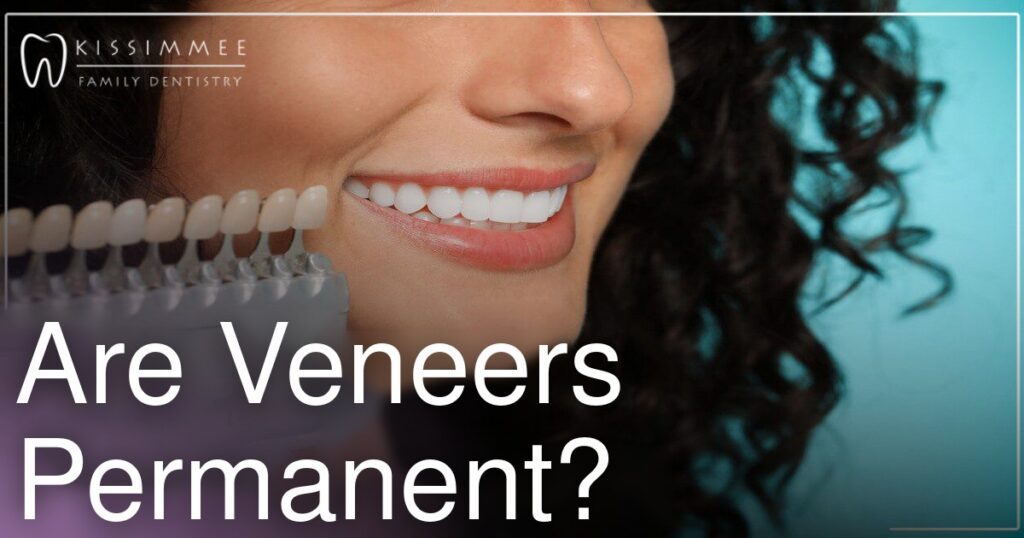
If you are thinking about upgrading your smile, one of the first questions that usually comes up is simple and loaded at the same time: are veneers permanent?
The honest answer is yes and no.
Veneers are considered a long-term cosmetic dental treatment, and the decision to get them is generally permanent because teeth usually need to be reshaped before veneers are placed. But the veneers themselves do not last forever. They can wear down, chip, loosen, or eventually need replacement after years of use.
That distinction matters. Many people hear “permanent” and picture something indestructible, like tile on a floor or stone on a countertop. Veneers are not that. They are more like a beautifully tailored jacket for your teeth: custom-made, durable, and designed to last, but still something that requires care and may need to be replaced over time.
If you are considering veneers in Kissimmee, it helps to understand exactly what is permanent, what is not, how long veneers typically last, and whether they are the right fit for your goals.
What Veneers Actually Are
Veneers are thin shells, usually made from porcelain or composite resin, that are bonded to the front surface of teeth. They are commonly used to improve the appearance of teeth that are stained, chipped, misshapen, worn down, uneven, or separated by small gaps.
They do not replace the whole tooth. Instead, they cover the visible front portion to create a more balanced, brighter, and more symmetrical smile. For many patients, veneers can make a dramatic difference without the need for more extensive restorative work.
Porcelain veneers are the option most people think of when they imagine a high-end smile makeover. They are known for their natural look, stain resistance, and durability. Composite veneers are usually less expensive and can sometimes be completed more quickly, but they generally do not last as long as porcelain.
So, Are Veneers Permanent?
In practical terms, veneers are treated as a permanent or irreversible cosmetic procedure because the preparation process often involves removing a small amount of enamel from the natural tooth. Once that enamel is removed, it does not grow back.
That means your tooth will continue to need some form of coverage going forward, whether that is the original veneer, a replacement veneer, or in some cases another restoration. So while the veneer itself is not permanent forever, the choice to prepare the tooth for veneers usually is.
This is where patients sometimes get tripped up. They ask, “Can I just try veneers and go back if I change my mind?” In most traditional cases, the answer is no. Veneers are not like a removable accessory. They are bonded restorations that become part of your long-term dental plan.
That is why the planning stage matters so much. A good cosmetic dentist does not rush this conversation. They look at your bite, your enamel, your habits, your goals, and whether veneers are actually the best tool for the job.
What Part of Veneers Is Permanent and What Part Is Not
The permanent part is usually the tooth preparation.
To make room for the veneer and help it sit naturally, a dentist often removes a thin layer of enamel. This keeps the final result from looking bulky and helps create a secure fit. Once enamel is removed, your natural tooth structure has been permanently altered.
The non-permanent part is the veneer restoration itself.
Even excellent veneers have a lifespan. They are strong, but they are still subject to daily pressure from chewing, temperature changes, grinding, clenching, and normal wear. Over time, they may need polishing, repair, or replacement.
Think of it like replacing the siding on a house. The structure underneath remains, but the outer material may need to be updated after years of weather and use. Veneers work in a similar way.
How Long Do Veneers Last?
Porcelain veneers commonly last around 10 to 15 years, and in some cases longer with excellent care. Composite veneers often last closer to 5 to 7 years before they need more noticeable maintenance or replacement.
That range depends on several factors, including:
- the material used
- the quality of the bonding and placement
- your bite alignment
- whether you grind or clench your teeth
- your oral hygiene habits
- how often you chew ice, bite nails, or use teeth as tools
Some patients keep porcelain veneers looking great well past the 15-year mark. Others run into problems earlier because of heavy wear, sports injuries, untreated grinding, or changes in the underlying tooth.
Longevity is not just about the veneer itself. It is also about the environment the veneer lives in. A beautifully made veneer placed on a tooth in a healthy mouth with a stable bite has a much better future than one placed into a situation full of stress and neglect.
Do Veneers Ruin Your Natural Teeth?
This is another common worry, and it deserves a clear answer.
Veneers do not “ruin” healthy teeth when they are properly planned and placed by an experienced dentist. But they do permanently change the teeth that receive them. Because some enamel is usually removed, those teeth will need ongoing restoration from that point on.
That is very different from saying the teeth are damaged beyond use. In fact, veneers can protect the prepared front surface while improving appearance at the same time. The key is that the treatment should be appropriate for the patient.
Problems tend to happen when veneers are used where they should not be, or when patients are not fully informed about the long-term commitment. If someone has severe grinding, untreated gum disease, significant decay, or unrealistic expectations, veneers may not be the right first step.
A careful exam matters. At a practice focused on long-term oral health, cosmetic treatment should never be separated from function, comfort, and stability. That is one reason many patients start by learning more about broader cosmetic dentistry options before deciding what makes the most sense for their smile.
Can Veneers Be Removed?
Veneers can be physically removed by a dentist, but that does not mean the teeth can simply go back to their untouched original state.
If a traditional veneer was placed after enamel reduction, the tooth will still need protection and coverage after removal. In most cases, that means replacing the old veneer with a new one. So yes, veneers can be removed in the technical sense, but not reversed in the casual sense people often mean.
There are some minimal-prep or no-prep veneer cases where less enamel reduction is involved, but not everyone is a candidate for those. They work best in specific situations and still require careful case selection.
This is why the question should not only be “Can veneers be removed?” It should be “What will my teeth need for the next decade and beyond if I choose veneers?” That is the more useful conversation.
Who Is a Good Candidate for Veneers?
Veneers can be a great option for people who want to improve the look of front teeth affected by discoloration, minor chips, uneven edges, small gaps, or mild shape differences.
They are often ideal for patients whose teeth are healthy overall but do not look the way they want them to. If the issue is mostly cosmetic and the tooth structure is otherwise sound, veneers can create a very natural-looking transformation.
That said, not every smile concern needs veneers. In some cases, teeth whitening, bonding, Invisalign, or crowns may be more appropriate depending on the problem.
For example, if your main concern is color rather than shape, whitening may be the simpler route. If you are comparing options, it can help to understand what professional teeth whitening typically involves before jumping into a more permanent cosmetic treatment.
When Veneers May Not Be the Best Option
Veneers are not always the right answer, even when someone wants a prettier smile.
They may not be ideal if you have active gum disease, untreated cavities, severe enamel erosion, heavy teeth grinding, or major bite issues. In those cases, placing veneers without addressing the underlying problem is like painting over a crack in the wall without fixing the foundation.
Patients who clench or grind their teeth can still sometimes get veneers, but they may need a night guard and careful planning to reduce the risk of fracture or debonding. Patients with extensive existing damage may need crowns instead of veneers because the tooth needs more structural coverage.
This is also why routine exams and cleanings matter before cosmetic work. Healthy gums and a stable oral environment give veneers a much better chance of lasting. Ongoing preventive dental care and cleanings are not glamorous, but they are often what protect the investment.
What the Veneer Process Usually Looks Like
The veneer process usually begins with a consultation. Your dentist will evaluate your teeth, gums, bite, and goals. Photos, digital scans, or impressions may be taken, and you will talk through shape, shade, and what kind of result you want.
From there, the teeth are typically prepared by removing a small amount of enamel. Temporary veneers may be placed while the final restorations are being made, especially with porcelain veneers.
Once the custom veneers are ready, your dentist checks the fit, color, and overall look before bonding them into place. Small adjustments may be made so that the veneers feel natural and your bite comes together comfortably.
A good veneer case should not just look bright in a mirror. It should also feel balanced when you talk, smile, and chew. The best cosmetic dentistry is not obvious from across the room. It just looks like you, only more rested, more polished, more confident.
How to Make Veneers Last Longer
If you decide to get veneers, the goal is not just to love them on day one. It is to keep them healthy and attractive for years.
The basics matter more than people think. Brush twice a day, floss daily, and keep up with regular dental visits. Even though porcelain does not decay, the natural tooth underneath and around the veneer still can. The gumline can still become inflamed. Bonding margins can still collect plaque.
You should also avoid habits that put unnecessary stress on veneers, such as:
- chewing ice
- opening packages with your teeth
- biting fingernails
- grinding or clenching without protection
- chewing hard objects like pen caps
If you play contact sports, a mouthguard is smart. If you grind your teeth at night, a custom night guard can make a real difference in protecting your restorations.
Small habits have a way of becoming expensive habits in dentistry. A veneer is durable, but it is not a bottle opener and it is not a workshop tool.
Are Veneers Worth It?
For the right patient, veneers can absolutely be worth it.
They can create a dramatic improvement in smile symmetry, brightness, and confidence in a relatively short amount of time. Many people who have spent years hiding their teeth in photos or covering their mouth when they laugh feel an immediate emotional shift after treatment.
But veneers are worth it only when the patient understands the tradeoff. You are choosing a long-term cosmetic solution that often involves irreversible preparation. In return, you get a custom result that can look beautiful and natural for many years.
That tradeoff feels very reasonable to some people and too significant to others. Neither reaction is wrong. The right choice depends on your priorities, your dental health, and how much change you want.
Questions to Ask Before Getting Veneers
Before moving forward, it helps to ask direct questions during your consultation.
Ask whether your teeth require enamel removal, whether porcelain or composite makes more sense for your case, how long your veneers are expected to last, and what maintenance they will need. You should also ask what alternatives might help you reach your goals with less permanent change.
Other useful questions include:
- Am I a good candidate for veneers?
- Will I need temporary veneers?
- What happens if one chips or comes off?
- How will veneers affect my bite?
- Do I grind my teeth?
- Are whitening, bonding, or orthodontics better options for me?
A trustworthy dentist will not act annoyed by these questions. They will welcome them. Cosmetic dentistry should feel collaborative, not salesy.
Veneers and Long-Term Smile Planning
The best veneer decisions are made with the long view in mind.
That means thinking beyond the before-and-after photo. It means asking how your smile will function, how your restorations will age, and what kind of maintenance you are comfortable with over time. It also means choosing a dental team that values comfort, clarity, and individualized care rather than one-size-fits-all solutions.
For patients in Kissimmee and surrounding communities, that kind of planning matters. A smile should not just look better for a season. It should support your confidence and oral health for years.
Final Answer: Are Veneers Permanent?
Yes, veneers are generally considered a permanent cosmetic treatment because traditional veneers usually require irreversible enamel removal. No, the veneers themselves are not permanent forever, because they will likely need replacement at some point.
That is the clearest way to think about it.
If you want a cosmetic solution that can dramatically improve the appearance of your smile, veneers may be an excellent option. But they are not a casual, temporary experiment. They are a long-term commitment, and they deserve thoughtful planning.
When done well, veneers can look natural, feel comfortable, and hold up beautifully for many years. The key is making sure the treatment fits not just the smile you want today, but the oral health you want to maintain tomorrow.