
Missing teeth can affect more than your appearance. They make eating certain foods difficult, change how you speak, and can even impact your jawbone health over time. If you’re considering dental implants as a solution, one question naturally comes up: how long do dental implants actually last?
The answer is more encouraging than you might expect. With proper care, dental implants can last decades, and in many cases, a lifetime. Let’s look at what determines implant longevity, what you can expect from the process, and how to get the most out of your investment.
The Typical Lifespan of Dental Implants
Dental implants have an average lifespan of 10 to 30 years, though many last even longer. The titanium post that acts as your artificial tooth root can last for life once it fully integrates with your jawbone. This makes implants the longest-lasting tooth replacement option available today.
Compare that to other tooth replacement methods. Traditional bridges typically last 5 to 15 years before they need replacement. Dentures usually require adjustment or replacement every 5 to 10 years as your mouth changes shape. Dental implants, on the other hand, become a permanent part of your jaw structure.
That permanence comes from a remarkable biological process called osseointegration, where your jawbone actually fuses with the titanium implant post. This creates a stable foundation that functions just like a natural tooth root.
Why Implants Last So Much Longer Than Alternatives
The secret to dental implant longevity lies in their design and how they interact with your body.
Traditional dentures and bridges sit on top of your gums or attach to adjacent teeth. They don’t address what happens to your jawbone after tooth loss. Without a tooth root stimulating the bone, your jaw gradually loses density and changes shape. This is why dentures eventually stop fitting properly.
Dental implants solve this problem by replacing both the visible tooth and the root beneath your gums. The titanium post extends into your jawbone, where it provides the same stimulation your natural tooth root once did. This prevents bone loss and helps maintain your facial structure.
Titanium is biocompatible, meaning your body accepts it without triggering an immune response. Over several months following implant placement, bone cells grow around and bond with the implant surface. This fusion creates a connection so strong that it can withstand the same chewing forces as your natural teeth.
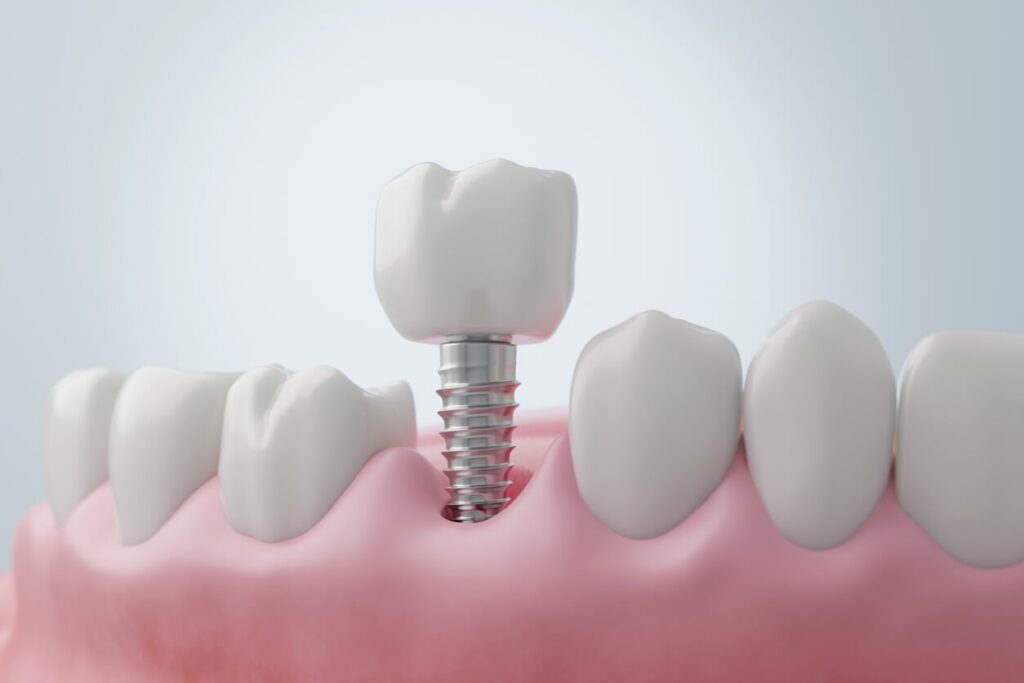
Understanding the Different Parts of Your Implant
A dental implant actually consists of three separate components, and they don’t all have the same lifespan.
The implant post is the titanium screw that’s surgically placed in your jawbone. This part typically lasts a lifetime with proper care and maintenance. Once osseointegration is complete, the bond between bone and implant is remarkably durable.
The abutment is a small connector piece that attaches to the implant post and extends through your gum tissue. This component is usually very long-lasting and rarely needs replacement.
The crown is the visible tooth replacement that sits on top of the abutment. Made from porcelain or ceramic materials, crowns are designed to look and function like natural teeth. However, they’re subject to the same wear and tear as your other teeth. Most implant crowns last 10 to 15 years before they need replacement due to normal use.
The good news is that replacing a crown is much simpler and less expensive than the original implant placement. The implant post and abutment remain undisturbed while only the crown gets swapped out.
Factors That Affect How Long Your Implants Last
Not everyone’s implants last the same amount of time. Several factors influence longevity:
Oral hygiene ranks as the single most important factor. While the implant itself can’t develop cavities, your gums and surrounding bone tissue remain vulnerable to infection. Gum disease can cause the bone supporting your implant to deteriorate, potentially leading to implant failure.
Smoking significantly shortens implant lifespan. Tobacco use restricts blood flow to your gums, which slows healing after surgery and interferes with osseointegration. It also increases your risk of gum disease and infections around the implant site.
Overall health conditions play a role too. Uncontrolled diabetes can impair healing and reduce implant success rates. Autoimmune conditions or treatments that suppress your immune system may also affect how well your body accepts the implant.
Jaw bone quality and density at the time of placement matters. Patients with sufficient healthy bone typically experience better long-term outcomes. Those who need bone grafting before implant placement may require more careful monitoring.
Location in your mouth can make a difference. Back teeth endure greater chewing forces than front teeth, which can accelerate wear on the crown portion of your implant.
Regular dental visits allow your dentist to catch potential problems early, before they threaten your implant. Professional cleanings remove plaque and tartar that regular brushing might miss.
How to Maximize Your Implant’s Lifespan
Taking care of dental implants isn’t complicated, but it does require consistency. Here’s how to give your implants the best chance at lasting a lifetime:
Brush twice daily using a soft-bristled toothbrush. Pay special attention to where the crown meets your gum line, as plaque tends to accumulate there. While your implant crown won’t decay, bacteria can still irritate your gums.
Floss every day around your implant just as you would a natural tooth. Special floss threaders or water flossers can help you clean around the implant and beneath any bridge work.
Schedule regular dental checkups every six months. These visits allow your dentist to monitor your implant, check for signs of gum disease, and perform professional cleanings. Early detection of problems makes treatment simpler and more effective.
Avoid using your teeth as tools. Don’t tear open packages, crack nuts, or chew ice with your implants. These habits can crack the crown or damage the connection to the abutment.
Protect your investment if you grind your teeth at night. A custom nightguard prevents excessive force on your implant crowns while you sleep.
Maintain your overall health. Keep any chronic conditions like diabetes well-controlled, as this supports healing and reduces infection risk. Consider taking calcium and vitamin D supplements (with your doctor’s approval) to support bone health.
Quit smoking if you haven’t already. Beyond the general health benefits, stopping tobacco use dramatically improves your implant’s chances of long-term success.
Signs Your Implant May Need Attention
Most dental implants function without issues for many years, but you should know what warning signs to watch for:
- Persistent pain or discomfort around the implant site
- Swelling or redness in the gum tissue near the implant
- Looseness or movement in the crown or implant
- Difficulty chewing on the implant side
- Changes in how your bite feels
If you notice any of these symptoms, contact your dentist promptly. Early intervention can often save an implant that might otherwise fail if left untreated.
Why Kissimmee Family Dentistry for Your Dental Implants
At Kissimmee Family Dentistry, dental implants represent one of our core specialties. For over 30 years, we’ve helped patients throughout Kissimmee restore their smiles with implants designed to last.
What sets us apart is our comprehensive approach. We handle everything in-house, from initial consultation through final restoration. This continuity of care means you work with the same trusted team throughout your implant journey.
We use digital imaging and 3D planning to ensure precise implant placement. This technology allows us to visualize your unique anatomy before surgery, reducing complications and improving long-term outcomes. For patients who feel anxious about the procedure, we offer sedation options to keep you comfortable.
Our experienced doctors understand that each patient’s situation is unique. If you don’t currently have sufficient bone density for implants, we can discuss bone grafting or other preparatory treatments to help you become a candidate.
We also believe everyone deserves access to quality dental care, which is why we offer flexible financing options. Dental implants are an investment in your long-term oral health, and we work with you to make that investment manageable.
Your Implants Are Worth the Investment
When you consider how long dental implants last compared to other tooth replacement options, their value becomes clear. You may replace dentures multiple times over 20 years. Bridges eventually fail and need replacement. But a dental implant, properly cared for, can serve you for decades or even life.
Beyond longevity, implants preserve your jawbone, protect your remaining teeth, and restore full chewing function. They look natural, feel comfortable, and don’t require the special adhesives or cleaning solutions that dentures demand.
If you’re living with missing teeth or struggling with ill-fitting dentures, dental implants may be the lasting solution you’ve been looking for. At Kissimmee Family Dentistry, we’re here to answer your questions, evaluate your specific situation, and create a personalized treatment plan.
Ready to learn more about dental implants and whether they’re right for you? Schedule a consultation with us to discuss your options. We’ll examine your oral health, explain what to expect from the implant process, and help you understand what kind of longevity you can realistically expect from your specific situation.