
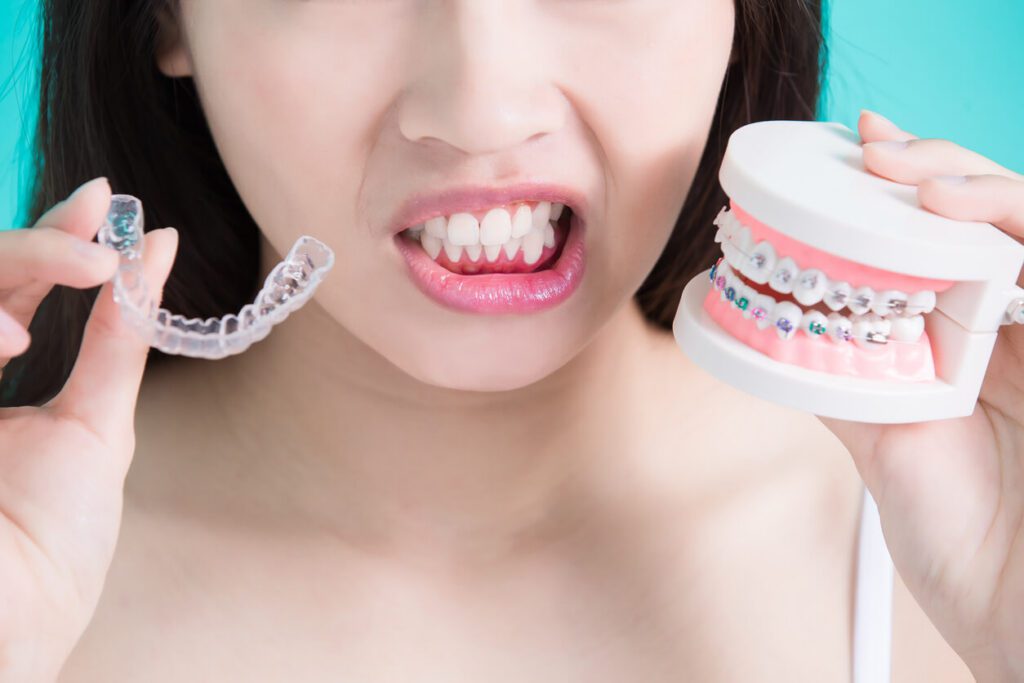
If you are comparing Invisalign versus braces, you are probably not looking for a vague answer. You want to know what will actually work for your smile, your schedule, your budget, and your life. The honest answer is that both can be excellent forms of orthodontic treatment, but they solve problems in different ways.
Some patients care most about appearance. Others want the shortest treatment time possible. Some need help with bite problems or more complex orthodontic issues, while others mainly want to straighten teeth that have shifted over the years. The better choice depends less on trends and more on your actual orthodontic needs.
At Kissimmee Family Dentistry, patients often want clarity before they commit. That makes sense. Choosing between Invisalign and braces is not like picking between two brands of toothpaste. It is more like choosing between two roads to the same destination. Both can get you there, but the ride feels very different.
Why This Comparison Matters
A lot of online articles treat Invisalign vs braces like a simple beauty contest. One is clear, one is not, and case closed. Real life is more complicated than that. The right orthodontic treatment has to move teeth properly, improve oral health, support a stable bite, and fit into your daily life.
That is especially true for teens and adult patients who already have work, school, family obligations, and a calendar that does not leave much room for constant disruption. A treatment method that looks good on paper may not be the one you can realistically stick with.
How Traditional Braces Work
Traditional braces use fixed appliances attached to the teeth. Small metal brackets are bonded to the front of each tooth and connected with metal wires. Over time, those wires apply controlled force so teeth gradually move into the desired position.
Because traditional braces stay in place around the clock, they do not rely as much on patient compliance. You cannot forget to put them in after lunch or leave them on a nightstand before bed. That built-in consistency is one reason traditional braces remain such a reliable option for children, teens, and adults with a wide range of orthodontic problems.
Traditional braces are especially useful when an orthodontist or dentist needs very precise tooth movement. They can help correct crowding, spacing, rotation, and bite problems with a high degree of control. For many complex cases, braces are still the standard against which other treatment options are measured.
How Invisalign Treatment Works
Invisalign treatment uses a series of custom-made clear aligners to shift teeth gradually. Instead of metal brackets and metal wires, patients wear smooth plastic trays that fit snugly over the teeth. Each set of aligners is designed to move the teeth a little closer to the desired position.
Invisalign clear aligners are removable aligners, which means you take them out for meals, brushing, and flossing. That flexibility is a major reason many patients prefer them. The trays are virtually invisible at a conversational distance, and for people who feel uneasy about a mouthful of hardware, that matters.
Invisalign aligners provide a different experience from fixed appliances. There are no sharp edges, no tightening appointments in the traditional sense, and no food restrictions caused by brackets or wires. But there is a tradeoff: the system works best when patients wear aligners exactly as instructed. If the trays spend too much time in a case instead of in your mouth, treatment time can stretch out.
Appearance: The Most Obvious Difference
For many people, the first question in the Invisalign vs braces conversation is appearance. That is understandable. Orthodontic treatment can last months or even a couple of years, and people want to feel comfortable smiling during that time.
Invisalign aligners are popular because they are virtually invisible. The invisible appearance appeals to professionals, college students, wedding-bound adults, and self conscious teens who do not want traditional braces showing in photos or during social events. Aesthetics Invisalign aligners offer is often the deciding factor for patients who want a more discreet option.
Traditional braces are much more visible. Even when patients choose ceramic braces, which use tooth-colored materials, the appliance is still noticeable. Metal braces are the most visible of all, though some patients do not mind that at all. In fact, some teens like the look because braces clearly signal that they are actively improving their smile.
If appearance is your top priority, Invisalign has a strong edge. If your main concern is getting the teeth into the correct position as efficiently as possible, visibility may matter less.
Comfort in Daily Life
No orthodontic treatment is completely effortless. Teeth move because pressure is being applied, and that process can create soreness no matter which option you choose. Still, the kind of discomfort tends to differ.
Invisalign aligners are made from smooth plastic, so there are no metal brackets rubbing against the cheeks and no metal wires poking the lips. Many Invisalign patients describe the sensation as gentle pressure, especially when switching to a new set of aligners. That pressure is normal. It is a sign the trays are doing their job.
Traditional braces can cause irritation, especially in the early stages or after adjustments. Brackets may rub, and wires can occasionally feel intrusive. Dental wax usually helps, and most patients adapt, but the adjustment period is real. It is a bit like breaking in a stiff new pair of shoes: manageable, but not exactly fun.
For comfort alone, many patients feel that both Invisalign and braces are tolerable, but Invisalign and braces create very different day-to-day experiences. If you are sensitive to texture or easily bothered by hardware in your mouth, clear aligners may feel easier.
Eating and Food Restrictions
One of the most practical differences between braces or Invisalign shows up at mealtime. With traditional braces, food restrictions are part of the package. Hard foods can break brackets. Sticky foods can pull wires loose. Certain foods like popcorn, caramel, chewing gum, and crusty bread can create trouble fast.
That means braces patients often need to avoid sticky foods and be careful with certain foods throughout treatment. It is not impossible, but it does require planning. A quick casual bite can turn into a mirror inspection and a cleanup mission.
Invisalign treatment gives patients more freedom because the trays are removed before eating. There are no food restrictions in the same way, since you are not chewing with the appliance in place. You can enjoy apples, nuts, or crunchy foods without worrying about damaging metal brackets.
That said, removable aligners come with responsibility. After eating, patients should brush before putting the trays back in. If you snack all day and do not want to pause for brushing, Invisalign can become inconvenient. Freedom is great, but it asks something of you in return.
Brushing, Flossing, and Oral Health
Oral health should be a central part of this decision, not an afterthought. Straight teeth are great, but healthy gums and clean enamel matter just as much.
With traditional braces, brushing and flossing take more effort. Food can collect around metal brackets and under metal wires, which increases the risk of plaque buildup. Patients need regular check ups, careful brushing, and consistent flossing tools to keep everything clean. If oral hygiene slips, the teeth may look straighter at the end of treatment, but the enamel may not be in great shape.
Invisalign clear aligners can offer easier oral hygiene because you remove them before brushing and flossing. For patients who are already disciplined with brushing and flossing, this can be a major advantage. Easier oral hygiene is one reason some adult patients prefer aligners over fixed appliances.
Still, that does not mean Invisalign is maintenance-free. If patients skip brushing and then wear aligners over food residue and sugar, that can create its own problems. Good oral health depends on habits, not just hardware.
Which Option Works Better for Complex Cases?
This is where the answer often becomes less emotional and more clinical. For complex cases, traditional braces usually offer more control. Severe crowding, major bite problems, large rotations, and complex orthodontic issues may respond better to braces because fixed appliances can direct movement with precision.
Traditional braces remain the best choice for many complex orthodontic situations. If the goal is to move teeth properly in several directions at once, or to correct significant complex orthodontic issues, braces often give the orthodontist more tools to work with.
That does not mean Invisalign treatment is only for mild cosmetic fixes. Invisalign has improved dramatically and can treat many moderate cases and even some complex cases. With attachments, staging, and careful planning, Invisalign aligners provide impressive control for many patients.
Still, when comparing Invisalign versus braces for complex orthodontic needs, braces often hold the advantage. The right answer depends on the specifics of your bite, tooth position, bone support, and treatment plan.
Treatment Time: Which Is Faster?
Patients almost always ask about treatment time, and the truthful answer is: it depends. Some Invisalign treatment cases move quickly, especially moderate alignment concerns where the patient is highly consistent. Some braces cases also move efficiently, especially when fixed appliances are the best mechanical match for the problem.
In Invisalign vs braces comparisons, treatment time is tied closely to patient compliance. If you do not wear aligners as directed, the teeth do not move on schedule. Missed wear time can quietly add weeks or months. Invisalign can be elegant, but it is not forgiving.
Traditional braces remove that variable because they stay on all the time. For patients who know they may struggle to wear aligners consistently, braces can actually be the faster treatment method. You do not get style points for choosing the sleek option if it drags out treatment.
An experienced orthodontist or dentist will estimate treatment time based on your specific treatment plan, not a generic online average. That estimate should account for complexity, age, bite correction, and how realistic the at-home expectations are for you.
Fewer Office Visits and Convenience
One reason many adults like Invisalign treatment is convenience. In many cases, aligners can mean fewer office visits than traditional braces. There are no emergency appointments for broken brackets, and check-ins are often straightforward.
Invisalign aligners provide a smoother schedule for patients with work demands, travel, or packed family routines. If your calendar already looks like a game of Tetris, fewer office visits can be a real advantage.
Traditional braces may require more frequent adjustments and occasional repairs. That is not necessarily a downside if you want closer in-person monitoring, but it is worth considering. Convenience is not the most important clinical factor, yet in real life it matters more than people admit.
Cost Comparison: What Should Patients Expect?
A cost comparison between braces and aligners is rarely one-size-fits-all. The total cost depends on the complexity of the case, the estimated treatment time, the materials used, and whether refinements or additional phases are expected.
In many practices, traditional braces and Invisalign treatment fall into a similar general range, though one may be slightly higher depending on the case. Metal braces are often the most economical option. Ceramic braces may cost more, and Invisalign can also vary depending on how involved the treatment is.
Patients should also ask how dental insurance plans apply. Many dental insurance plans and orthodontic benefits help cover braces, and some also cover Invisalign treatment. It is important to verify whether dental insurance plans treat both options the same way. Many dental insurance plans have age limits, lifetime orthodontic maximums, or exclusions that affect the final cost.
When looking at cost, think beyond the sticker price. If one treatment method fits your life better and helps you finish on time with fewer setbacks, that value matters too. The cheapest option is not always the least expensive in the long run.
Invisalign vs Braces for Adults
Adult patients often lean toward clear aligners because they want a discreet option that fits professional and social settings. The virtually invisible look of Invisalign clear aligners can make treatment feel less intrusive during meetings, presentations, or everyday conversations.
Invisalign patients also tend to appreciate being able to remove the trays for photos, special occasions, or important events. That flexibility can make treatment easier to live with emotionally, not just physically.
That said, adults are not automatically better candidates for Invisalign. Some adult patients have complex orthodontic issues, old dental work, missing teeth, or bite problems that make traditional braces the more predictable route. Adult life is busy, and busy people are not always great at remembering to wear aligners.
What About Teens?
Teens can do well with either option, but personality matters. Some self conscious teens love the invisible appearance of aligners and feel more confident during school, sports, and social events. Others do better with traditional braces because they do not have to think about compliance every few hours.
If a teen is responsible and motivated, Invisalign treatment can be an excellent choice. If they are likely to lose trays, forget them at lunch, or leave them out during sleepovers, braces may be the safer bet.
This is why the braces or Invisalign decision should never be made from photos alone. The right orthodontic treatment has to fit the patient, not just the smile goal.
Other Treatment Options to Know About
While most patients compare clear aligners with traditional braces, there are a few other treatment options worth mentioning. Ceramic braces offer a less noticeable version of braces by blending in more with the teeth. Lingual braces are placed behind the teeth, making them less visible from the front.
These options can be useful in specific situations, but they are not always ideal for every case. Lingual braces, for example, can affect speech more at first and may be harder to clean. Ceramic braces can be more aesthetic than metal braces, but they still function as fixed appliances and come with similar cleaning demands.
For most patients, the real decision still comes down to Invisalign and braces. Those are the two paths most commonly recommended because they are versatile, proven, and widely understood.
Questions to Ask Before Choosing a Treatment Plan
Before starting any orthodontic treatment, ask what your actual orthodontic needs are. Are you dealing with mild crowding, moderate alignment issues, or complex orthodontic problems? Do you need cosmetic straightening, bite correction, or both Invisalign and braces as possible solutions?
You should also ask how each treatment plan fits your daily life. Can you realistically wear aligners the required number of hours each day? Are you willing to manage brushing after meals? Would food restrictions frustrate you, or would fixed appliances make life simpler because the treatment is always working?
Finally, ask about cost, expected treatment time, follow-up visits, and what happens if the case does not track exactly as planned. An informed decision comes from understanding the tradeoffs clearly, not from being sold the trendiest option.
So, Which Is Better?
When patients ask whether Invisalign versus braces is better, the most accurate answer is that one is not universally better than the other. Invisalign is often better for discretion, convenience, and easier brushing and flossing. Traditional braces are often better for control, compliance, and complex cases.
If your priorities are an invisible appearance, fewer office visits, and flexibility with meals, Invisalign may be the better fit. If your case involves complex orthodontic issues, significant bite problems, or a need for highly precise tooth movement, traditional braces may be the stronger choice.
The right orthodontic treatment is the one that can move your teeth into the correct position safely, efficiently, and realistically for your lifestyle. That is the goal. Not hype. Not aesthetics alone. Not what worked for your cousin or your coworker.
A Local, Personal Approach Matters
In a community like Kissimmee, many patients are balancing work, school, family schedules, and long-term dental needs all at once. Choosing between aligners and braces should not feel rushed or one-size-fits-all. It should feel like a real conversation about solutions and possibilities.
That kind of approach matters because orthodontic treatment is personal. It affects how you eat, how you clean your teeth, how you show up in public, and how confident you feel when you smile. A thoughtful evaluation helps match the treatment to the person, not just the chart.
Final Thoughts on Braces vs Aligners
The Invisalign vs debate only sounds simple from a distance. Up close, it is about mechanics, habits, comfort, appearance, cost, and what kind of support you need to succeed. Both Invisalign and braces can create a confident smile. Both can improve oral health when done well. Both can be the right choice.
The better question is not just which one is better in general. It is which one is better for you.
If you are weighing braces vs aligners and want guidance tailored to your dental needs, a consultation can help you compare treatment options with a clear, realistic plan. That way, you are not guessing. You are making an informed decision based on your smile, your goals, and the kind of care that puts comfort and long-term results first.