Restorative dentistry is about more than fixing a problem. Whether we’re looking at a chipped tooth, an old crown that needs attention, or a missing tooth that is making everyday life a little more difficult, restorative dentistry is about much more than repairs. It is about helping you eat comfortably, smile confidently, and maintain a healthy, functional smile for years to come. That is why training and experience are so important.
Restorative Dentistry Is About the Whole Smile
Think of a healthy smile like a system where every tooth works together. When one tooth is damaged or lost, it can have a cascade effect on the rest of your mouth. Changes in your bite, chewing patterns, and jaw function can gradually place stress on surrounding teeth.
What may begin as a small issue can lead to additional wear, discomfort, or future dental problems. Restorative dentistry focuses on rebuilding and protecting balance. Treatments such as crowns, bridges, dental implants, veneers, and tooth-colored fillings restore appearance and support long-term oral health and function.
Looking Beyond the Obvious
One of the biggest benefits of advanced restorative training is the ability to look beyond what is immediately visible. For example, a cracked tooth may not simply be the result of biting down on something hard. It could indicate a bite imbalance or be a sign of teeth grinding, excessive pressure, or years of gradual wear.
When we understand how all these factors work together, we can plan your treatment to address the underlying cause of the problem and not just repair the damage. This more comprehensive approach leads to better outcomes and can help you avoid recurring issues in the future.
Comfort Matters Too
You want your dental work to look good, but you also want it to feel good too. A crown, bridge, or implant should fit naturally into your bite and allow you to chew, speak, and smile comfortably. If restorations are designed with your entire smile in mind, you will experience greater comfort and fewer issues with sensitivity, uneven pressure, or jaw strain. Advanced restorative training helps dentists carefully evaluate how your teeth work together so treatment feels as natural as possible.
Creating Natural-Looking Results
Modern dentistry has come a long way in recent years. Today’s materials and techniques make it possible to create restorations that blend beautifully with your natural smile. Color, shape, and texture are all important factors in how a patient will feel about their restored smile. The goal is not to create a smile that looks artificial or overdone. Instead, restorative dentistry should help your teeth look healthy, balanced, and naturally attractive.
How Technology Supports Better Care
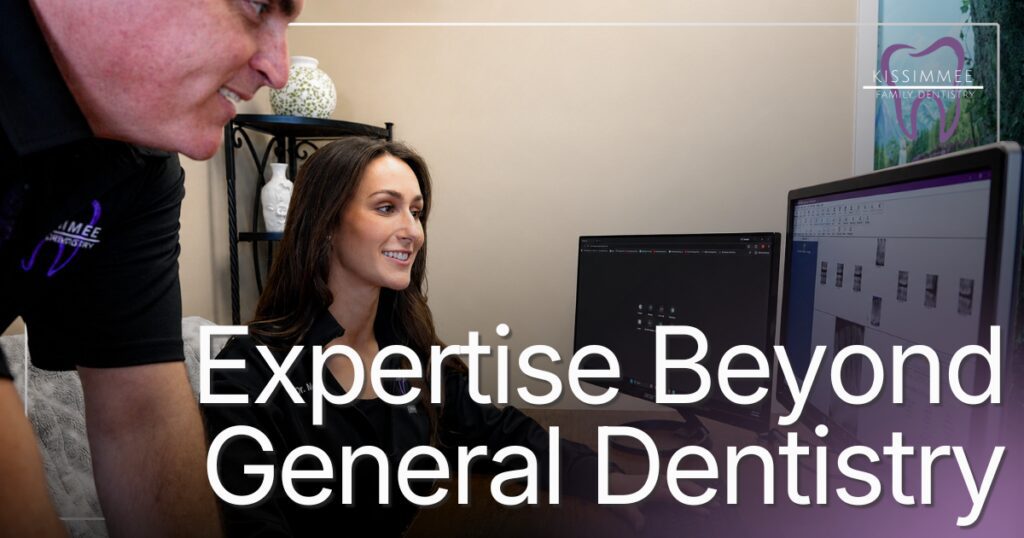
Advanced training often goes hand in hand with modern technology. Digital imaging, advanced treatment planning, and conservative techniques allow dentists to diagnose issues more accurately and create personalized treatment plans.
An Investment in Your Future Smile
Restorative dentistry is not just about fixing today’s problem. It is about protecting your smile for the future. Well-designed restorations can preserve healthy teeth, maintain bite stability, improve comfort, and reduce the likelihood of complications in the future. Taking a long-term view of a patient’s oral health often saves time, money, and frustration down the road.
Every patient has their own unique dental and medical history. Treatment can never be one size fits all. If you are considering restorative dental treatment or have questions about your options, we invite you to schedule a consultation with our office located in Kissimmee, FL. Our team is committed to providing personalized care that supports your comfort, confidence, and long-term oral health.